RESOURCE OPACITY
The Cardiac Anesthesia Division manages one of the hospital's most critical resources: anesthesiologists. Deployment decisions directly impact patient outcomes and operational costs. However, leadership was forced to rely on raw timestamp data buried in static Excel sheets. Without a clear signal, staffing was based on 'gut feeling' rather than actual utilization metrics.
THE ARCHITECTURE
We engineered a reproducible, code-first pipeline to transform raw operational data into clear utilization signals.
- Algorithmic Scoring: We built a custom Python engine (Pandas) to parse complex timestamp deltas, automatically calculating efficiency gaps by shift type.
- Reproducible Pipeline: Instead of a fragile manual process, we delivered a scripted data workflow. This allows the internal team to re-run the analysis on-demand with zero manual manipulation.
- Code-First Handover: We didn't just hand over a report; we handed over the capability. The Stanford team now owns the codebase, eliminating long-term dependency on external consultants.
OPERATIONAL CLARITY
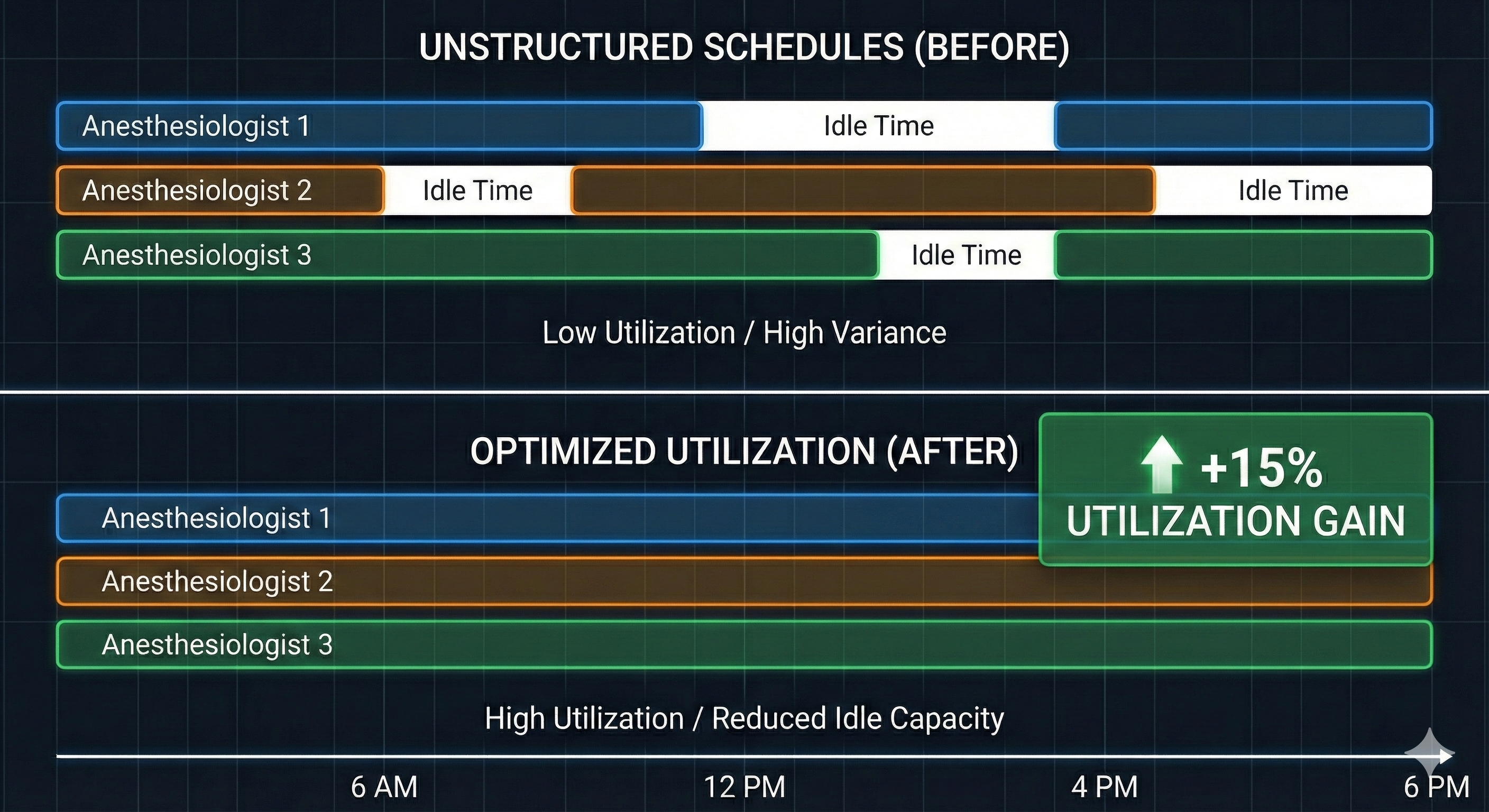
We moved the division from 'Gut-Feeling' to 'Data-Driven' deployment. The new intelligence engine identified a 15% capacity gap, allowing leadership to optimize shift assignments in real-time. The generated figures now serve as the single source of truth for critical staffing decisions.
"We finally have a single version of the truth for our staffing data."
— Division Leadership, Stanford Medicine